
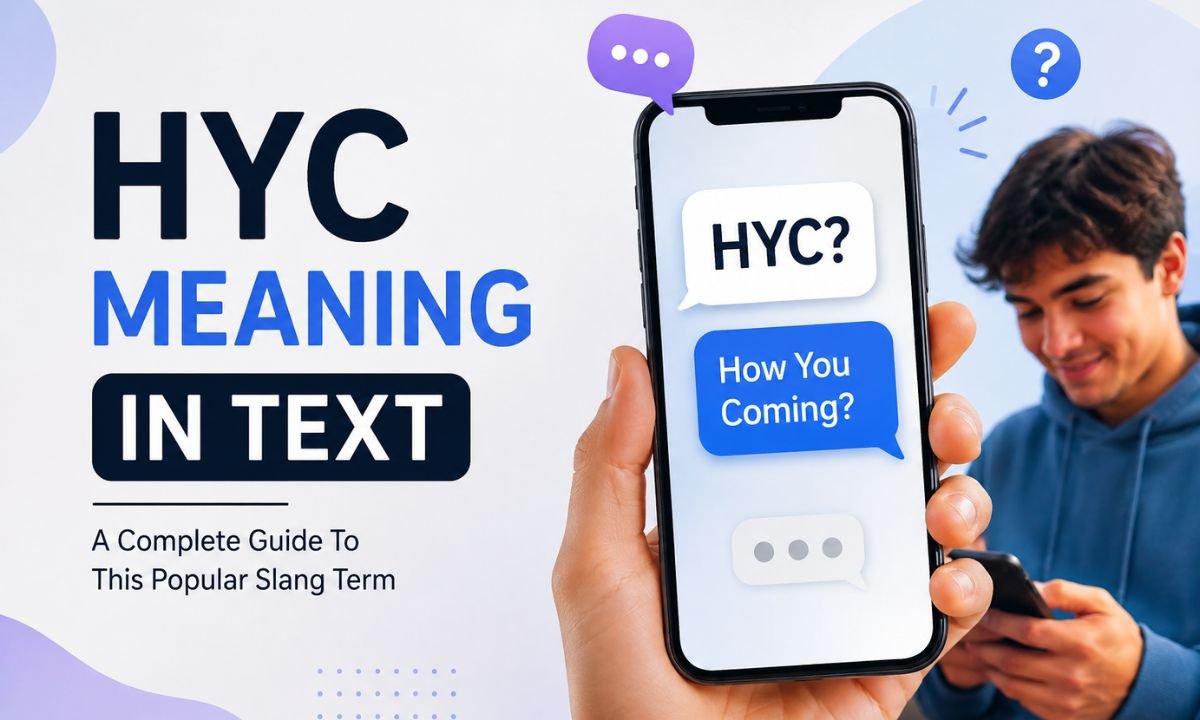

Have you ever received a text saying “HYC” and wondered what it actually means? You’re not alone. As texting slang continues to evolve, new abbreviations appear every day, making online conversations faster and more casual. Understanding these terms helps you communicate confidently and avoid confusion when chatting with friends, family, or people on social media.
The HYC meaning in text is most commonly “How You Coming?”, a casual way of asking how someone is doing, how things are going, or how they’re progressing. Instead of asking a formal question like “How are you?”, people use HYC as a quick and friendly conversation starter. The exact meaning can vary depending on the context, but it almost always serves as a relaxed way to check in with someone.
In this complete guide, you’ll learn what HYC means, where it came from, how people use it in text messages and social media, its alternative meanings, real-life examples, and the best ways to respond when someone texts you “HYC?” By the end, you’ll know exactly how to use this popular slang naturally in everyday conversations
What Does HYC Mean in Text?
HYC meaning in text is “How You Coming?” or “How You Comin’?” a casual, informal question that asks how someone is doing, their current situation, or their progress on something. It’s a colloquial way to check in with friends or acquaintances through text messages, social media, and instant messaging apps. This three-letter abbreviation has become increasingly popular among younger demographics, particularly in urban communities and online spaces where people value quick, efficient communication without sacrificing the personal touch.
The phrase isn’t asking a literal question about physical movement. Instead, it functions as a conversational opener that says: “What’s going on with you?” or “How are you managing?” It’s friendly, low-pressure, and carries a relaxed tone that works well in casual texting contexts. Understanding HYC meaning in text helps you respond appropriately and keep conversations flowing naturally, whether you’re chatting with friends, navigating dating apps, or engaging in online communities.
The Primary Definition: “How You Coming?”
When someone texts you “HYC,” the most common interpretation is “How You Coming?” a shortened version of a fuller phrase that asks about your current state, plans, or progress. This definition dominates across texting platforms, social media comments, and chat rooms where informal communication thrives.
The beauty of this phrase is its versatility. Someone could use HYC to ask how you’re doing after a long time apart, inquire about your progress on a project, check on your emotional well-being if they know you’re dealing with something, or simply open a casual conversation. The exact meaning depends entirely on context. If your friend texts “HYC? Haven’t heard from you in forever,” they’re checking in on your well-being. But if a coworker asks “HYC on the project?” they’re asking about your progress.
Why People Use “How You Coming?”
The phrase “how you coming” itself has roots in African American Vernacular English (AAVE) and urban American English. It’s been used in spoken conversation for decades before it migrated into text-based communication. The shift to digital spaces simply made the phrase even more efficient why type the full sentence when HYC communicates the same sentiment in three letters?
This linguistic efficiency is exactly why texting abbreviations became popular in the first place. When people texted through flip phones with number pads, saving characters meant saving time. Even though modern phones make typing easier, the abbreviations stuck because they feel natural, friendly, and connected to online culture. HYC carries all that history and meaning in a tiny package.
Alternative Meanings: Context Matters
While “How You Coming?” is the dominant definition, HYC meaning in text can shift slightly depending on regional slang, social circles, and the relationship between people. Recognizing these variations helps you avoid confusion and respond appropriately.
“How You Cool?” or “How You Coping?”
In some contexts, especially when someone knows you might be dealing with something challenging, HYC can mean “How You Cool?” or “How You Coping?” These interpretations maintain the same general purpose checking in but signal that the person asking is aware of a specific situation. The tone becomes slightly more concerned or empathetic. If a friend knows you have a big exam coming up or you’ve mentioned work stress, their “HYC?” might actually mean “How are you holding up?”
This variation is less common in everyday texting but appears more frequently when people are intentionally checking on someone’s emotional state. You can usually pick up this meaning from the broader conversation context rather than guessing.
Rare Variations: “Hell Yeah” And “Here’s Your Chance”
In rare instances, particularly in specific online communities or among certain friend groups, HYC has been reported to mean “Hell Yeah” (an exclamation of excitement) or “Here’s Your Chance” (indicating an opportunity). These meanings are significantly less common than the primary definition and usually only make sense within established inside jokes or community-specific slang.
Some people might even use “HYC” as a response to exciting news, shouting “HYC!” to express enthusiasm. However, if you’re unfamiliar with someone’s texting style, assuming the primary definition is the safest bet.
Where Did HYC Come From? A Brief History
HYC meaning in text doesn’t have a single, officially documented origin story. Unlike some abbreviations (LOL originated in early internet chat rooms), HYC evolved organically from conversational speech into digital shorthand.
The Rise of Urban Slang Online
The phrase “how you coming” became particularly popular in urban American communities, especially Chicago, during the 1990s and 2000s. As social media platforms grew and texting became the dominant form of communication for younger generations, the spoken phrase naturally transitioned into its abbreviated form. People began shortening “How you coming?” to “HYC?” in much the same way they shortened “Hello” to “Hi” or “What are you doing?” to “WYD.”
Gaining Traction in the Mid-2010s
HYC gained significant traction during the mid-2010s as TikTok, Snapchat, and Instagram became central to how young people communicate. The platform’s emphasis on speed, brevity, and authenticity created the perfect environment for slang terms to flourish. People could build entire conversations using abbreviations, emojis, and inside jokes that created community bonds.
Unlike established abbreviations such as LOL, BRB, or OMG (which quickly settled into single, universal definitions), HYC remained fluid. Its meaning evolved differently across regions, age groups, and online communities. This flexibility actually kept the term fresh and contributed to its enduring appeal. Young people appreciated that HYC could mean slightly different things depending on who was using it and why.
Regional And Cultural Variations
The term remains particularly strong in certain geographic regions, especially Chicago and other major urban centers. It’s also deeply connected to African American communication styles and vernacular English, which have historically shaped American slang and influenced broader internet culture. This connection to authentic cultural expression gives HYC a different feel than generic internet abbreviations it carries community, history, and belonging.
How to Use HYC Meaning in Text: Practical Examples
Understanding HYC meaning in text is one thing. Using it correctly in your own messages is another. Here are practical examples showing how people actually use this abbreviation across different situations:
Example 1: Reconnecting With Friend
Scenario: You haven’t spoken to an old friend in several months.
Message: “Yo, HYC? It’s been forever! What you been up to?”
What it means: You’re reaching out to catch up and want to know how they’re doing overall. The “HYC” acts as a genuine check-in that shows you care about their current life, not just making small talk.
Example 2: Checking on Progress
Scenario: You and a friend are both working on independent projects and checking in regularly.
Message: “HYC on that business plan we talked about?”
What it means: You’re specifically asking about their progress on something concrete. This version of HYC is more goal-oriented and practical, though still casual and friendly.
Example 3: Supportive Check-In
Scenario: You know a friend is going through a tough time.
Message: “Haven’t heard from you in a bit. HYC with everything?”
What it means: You’re acknowledging that you know they’re dealing with something and you want to know how they’re managing emotionally. The tone is warm and concerned.
Example 4: Social Media Comment
Scenario: You see someone’s post or story.
Comment: “HYC? Been a minute!”
What it means: You’re using HYC as a quick, friendly engagement tactic. On social media, it signals you’ve noticed someone and you’re thinking about them.
HYC Meaning in Text From Different Perspectives
The interpretation of HYC can shift depending on who’s sending it and what relationship exists between you and that person. Context truly is everything.
HYC From a Guy
When a guy texts “HYC,” he’s typically using it the same way anyone else would as a casual check-in. The gender of the person sending it doesn’t change the fundamental meaning. However, tone and context matter significantly. If a guy texts you HYC late at night after a long silence, the tone might be different than if he’s texting it in the middle of the day. If he includes emojis, multiple messages, or follows up quickly, that’s different from a single, standalone “HYC.”
The safest approach: don’t read too deeply into HYC itself. Instead, look at the entire message thread, the time of day, whether he’s been consistent in reaching out, and what your relationship actually is. HYC is a neutral greeting what matters is everything surrounding it.
HYC From a Girl
Similarly, HYC from a girl is usually just a friendly check-in. It doesn’t automatically signal romantic interest. A girl might text “HYC?” to a friend the same way she’d text it to anyone she cares about. The meaning doesn’t change based on the sender’s gender.
That said, context clues like follow-up messages, emojis, timing, and how frequently she reaches out will tell you more than the acronym itself. If someone is genuinely interested in connecting, that will typically show up in the full pattern of communication, not just a three-letter word.
HYC in Different Relationship Contexts
- Close friends: HYC is a warm, familiar greeting that might lead to deeper conversation
- Acquaintances: HYC is a friendly but lighter touch, an acknowledgment without commitment to a long conversation
- Dating/romantic interest: HYC might signal someone is thinking about you, but it’s not a confession it’s just an opening
- Professional contacts: HYC is less common in professional settings but might appear in more casual workplace relationships
Platform-Specific Uses: Where Do People Use HYC?
HYC appears across virtually every digital platform where people communicate casually, though the frequency and style of use varies.
Text Messaging
On traditional text messages, HYC is most common. It’s quick, efficient, and creates an intimate one-on-one conversation. People who text regularly often develop their own shorthand with specific people, and HYC might be part of that shared vocabulary. Text messages feel more personal than social media, so HYC here signals genuine interest in connecting.
Snapchat
On Snapchat, HYC appears in snaps, chats, and stories. The platform’s ephemeral nature (messages disappear) creates a casual vibe where abbreviations feel at home. People send “HYC?” snaps to multiple friends at once, or use it as a natural conversation starter when sliding into someone’s DMs.
Instagram and Direct Messages
Instagram DMs often feature HYC, especially in the early stages of connecting with someone or re-engaging with someone you haven’t talked to in a while. It’s casual enough to not feel like a big commitment but friendly enough to warm up a conversation.
TikTok Comments and Chats
On TikTok, HYC might appear in comments under videos as a way of engaging with creators or friends who posted. It’s also used in TikTok’s messaging feature similarly to Snapchat quick, casual, and often part of broader conversations about trending content.
WhatsApp and Facebook Messenger
These platforms, being text-focused, see frequent use of HYC. People who communicate regularly via these apps develop natural texting patterns where abbreviations like HYC become standard.
Twitter and Reddit
While less common on these platforms (which tend toward longer-form communication), HYC might appear in replies or direct messages, especially in more casual communities.
Common Misconceptions About HYC Meaning in Text
Several myths circulate about what HYC means and how to interpret it. Clearing these up helps you communicate more confidently.
Misconception 1: HYC Always Has a Single Universal Meaning
The Truth: HYC’s meaning shifts based on context, relationship, tone, and regional dialect. What it means in a group chat might differ slightly from what it means in a one-on-one message. This fluidity is actually what keeps the abbreviation relevant and useful it adapts to how people actually communicate.
Misconception 2: HYC From Romantic Interest Always Signals Deep Feelings
The Truth: Someone texting “HYC?” doesn’t automatically mean they’re interested in you romantically or that they like you more than a friend. It’s a greeting. Romantic interest usually shows up through consistent patterns of communication, not through a single abbreviation. Don’t assume you can decode someone’s feelings from three letters.
Misconception 3: HYC Is Rude or Dismissive
The Truth: HYC is friendly and neutral. It’s not rude, passive-aggressive, or cold. If someone felt dismissive, they wouldn’t bother starting a conversation at all. HYC signals someone is thinking about you and making an effort to connect, even if it’s brief.
Misconception 4: Everyone Knows What HYC Means
The Truth: Unlike older abbreviations (LOL, BRB), HYC isn’t universally recognized. Plenty of people encounter it and wonder what it means. This doesn’t make you out of touch it means you haven’t spent time in communities where HYC is common. That’s perfectly fine. Asking for clarification is totally acceptable.
Misconception 5: Using HYC Makes You Seem Unprofessional
The Truth: Context determines appropriateness. HYC in a text to a friend? Perfect. HYC in a formal work email? Probably not the right choice. But HYC in a casual Slack conversation with coworkers you’re friendly with? Absolutely appropriate. Use abbreviations where they match the tone and formality of the space.
How to Respond When Someone Texts You HYC
When someone asks “HYC?” you have several options depending on your relationship with them and your current situation. Here’s how to respond thoughtfully.
Response Strategy 1: The Honest Answer
If someone genuinely wants to know how you’re doing, give them a real answer. You don’t need to write a novel, but a genuine response shows you appreciate their check-in.
Response examples:
- “I’m good! Just been busy with work. How about you?”
- “Honestly been tough lately but hanging in. Thanks for asking!”
- “Can’t complain! What’s new with you?”
- “Pretty solid! About to head out. What’s going on?”
Response Strategy 2: The Reciprocal Question
Some people send HYC not necessarily because they need a deep answer but because they want to start a conversation. Responding with a brief update and then asking how they’re doing keeps the dialogue flowing.
Response examples:
- “Doing alright! HYC with you?”
- “Same old same old. What have you been up to?”
- “Not bad, just tired. How are things on your end?”
Response Strategy 3: The Light, Quick Response
If you’re busy or not in the mood for a longer conversation, keep it brief and friendly. There’s nothing wrong with a short response as long as it’s warm.
Response examples:
- “All good! Talk later?”
- “Can’t complain. Hit you back in a bit.”
- “Living! 😄”
- “Chilling rn, you?”
Response Strategy 4: The Honest “Not Great” Response
Sometimes you’re not doing well when someone asks. It’s okay to be real about that.
Response examples:
- “Eh, having one of those weeks but I’ll bounce back.”
- “Rough day but I’ll figure it out. Thanks for checking.”
- “Not gonna lie, been struggling. Thanks for reaching out.”
What NOT to Do
- Don’t ignore it completely (if you value the relationship)
- Don’t respond with anger or sarcasm unless you’re very close and that’s your normal dynamic
- Don’t treat it as an interrogation that requires a five-paragraph response
- Don’t respond only to deflect and never ask how they’re doing
HYC vs. Related Abbreviations: Understanding the Difference
HYC meaning in text becomes clearer when you compare it to similar abbreviations and phrases. Here’s how HYC differs from its cousins in the texting slang universe:
| Abbreviation | Meaning | Tone | Primary Use |
| HYC | How You Coming? | Casual, friendly | Check-in, conversation opener |
| WYD | What You Doing? | Casual, neutral | Asking about immediate activity |
| HYM | How You Man? | Casual, urban slang | Check-in, similar to HYC but regional |
| HYP | How You Playing? | Playful, teasing | Questioning someone’s behavior or decision |
| WUS | What You Saying? | Casual, urban slang | Greeting, asking for updates |
| SUP | What’s Up? | Casual, universal | General greeting |
| HBU | How About You? | Used after sharing | Turn-taking in conversation |
| HRU | How Are You? | Formal, direct | Asking about well-being |
The key difference: HYC is specifically about “coming” or “comin'” asking how someone is progressing or where they’re at. It’s not just “what are you doing” (WYD) or “how are you” (HRU). It’s a middle ground that feels more urban, more connected to specific cultural speech patterns, and more about understanding someone’s overall situation or progress.
Regional Variations: Is HYC More Common in Some Places?
HYC meaning in text shows stronger prevalence in certain geographic regions, though it’s used globally due to internet connectivity and the spread of American slang worldwide.
Chicago and the Midwest
HYC is particularly strong in Chicago slang. Urban Dictionary entries specifically note it as “Chicago slang,” and the phrase “how you coming” has deep roots in Midwestern African American communities. If you’re from or connected to Chicago, you might encounter HYC more frequently than someone from other regions.
Urban American Centers
Major urban centers (New York, Los Angeles, Atlanta, Houston, Philadelphia) show higher usage of HYC, particularly among younger demographics. Urban communities have historically shaped American slang, and their communication patterns spread globally through social media and pop culture.
Online and Global Spread
Through TikTok, Snapchat, Twitter, and other social platforms, HYC has spread well beyond its original geographic strongholds. Young people worldwide might use HYC after encountering it from American creators or friends. However, it remains more common in North America than elsewhere.
Age Demographics
HYC is most common among Gen Z and younger millennials (roughly ages 13-35). People older than that might not encounter it as frequently unless they’re around younger people or spend significant time on youth-oriented platforms.
The Evolution of Internet Slang: Why Abbreviations Like HYC Exist
To understand HYC meaning in text, it helps to understand why abbreviations became central to digital communication in the first place.
The Historical Context
In the 1990s and early 2000s, texting happened on phones with T9 predictive text or number-pad typing. Writing “Hello” required pressing keys multiple times. Abbreviations like “Hi” or “Hey” saved time and friction. This practical limitation shaped how people communicated online. Even as phone keyboards evolved and typing became easier, the abbreviations stuck because they felt natural and were part of digital culture’s identity.
Efficiency Meets Expression
Abbreviations do more than save characters they signal belonging to a community. When you use HYC, you’re participating in a form of communication that feels young, urban, and connected. It’s both efficient and expressive. You’re saying not just “I want to know how you’re doing” but “I want to know how you’re doing in a way that feels relaxed and familiar.”
The Continuing Evolution
Today, new abbreviations emerge constantly. Language has always evolved, but digital communication accelerates that evolution. What feels natural to a 15-year-old on TikTok might be completely foreign to a 40-year-old. And that’s okay. Language is living, breathing, and constantly adapting.
HYC Across Different Types of Relationships
The appropriateness and meaning of HYC shifts based on your relationship with the person sending it.
Close Friends and Inner Circle
With close friends, HYC is warm, familiar, and often leads to genuine conversation. Your friends know your communication style and what you’re dealing with, so HYC carries the weight of actual care. You might exchange “HYC?” texts multiple times a week as a natural part of staying connected.
Casual Friends and Acquaintances
With people you’re less close to, HYC is a lighter touch. It’s friendly but carries less expectation of deep conversation. You might respond with something brief and cheerful. The message is “I’m thinking of you” rather than “I want to talk about everything.”
Romantic Interest or Dating
If someone you’re interested in texts HYC, don’t overthink it. It’s an opening. Your response should be genuine and warm. If you’re interested in them, respond authentically. If you’re not, a brief friendly response is appropriate. What matters is the pattern of communication over time, not a single text.
Professional Relationships
In workplace contexts, HYC is less common but appears in more casual professional relationships. If a coworker you’re friendly with texts HYC, treat it as a friendly check-in. The professionalism is there by default in your work context; the abbreviation just indicates you’re comfortable enough to be casual.
Online Strangers or Acquaintances
If someone you don’t know well texts HYC, respond politely but you’re under no obligation to share deeply. A simple “All good, thanks!” is perfectly acceptable.
What Makes HYC Different From Formal English
Understanding how HYC meaning in text differs from standard English helps you appreciate why abbreviations matter in informal communication.
The Formality Spectrum
Formal: “How are you progressing?” Standard casual: “How are you coming along?” Texting casual: “How you coming?” Abbreviated texting: “HYC?”
Each step down this spectrum feels progressively more intimate and informal. HYC lives at the far informal end. It’s not about being uneducated or careless with language it’s about choosing the right register for the context. You wouldn’t use HYC in a job application, but you would use it when texting a friend.
Register and Context
“Register” refers to the level of formality you use in communication. Professional emails use formal register. Casual texts use informal register. Slang abbreviations like HYC belong firmly in informal register and signal that you’re comfortable being casual with someone. Using HYC shows you’re not trying to impress or maintain distance you’re being real.
Avoiding Misunderstandings: Tips for Using HYC Effectively
Even though HYC is generally friendly and clear, misunderstandings can happen. Here’s how to avoid them.
Tip 1: Know Your Audience
Before using HYC with someone, consider whether they’d understand it. If you’re texting your grandmother, “How you coming?” spelled out might be better than “HYC?” If you’re texting a friend, HYC is perfect. Tailor your communication to who you’re talking to.
Tip 2: Use Context Clues
When someone sends you HYC, look at the full message. Are there emojis? What time of day is it? Have you been talking recently? Is there something going on in their life that would explain why they’re checking in? Context clues help you interpret tone and respond appropriately.
Tip 3: Ask for Clarification
If you’re genuinely unsure what someone means, ask. “Hey, what do you mean by HYC?” is a perfectly valid question. Most people will clarify without judgment. It’s better to ask than to respond incorrectly.
Tip 4: Match Their Energy
If someone sends a serious “HYC?” because they know you’re going through something, match that energy with a genuine response. If someone sends a playful “HYC?” with emojis, you can respond more lightly. Mirroring their tone helps communication flow smoothly.
Tip 5: Don’t Assume Romance
Unless there’s a clear pattern of romantic interest, don’t assume HYC signals romantic feelings. It’s usually just a check-in. Save your interpretation for the full picture of their behavior, not a single text.
The Future of Texting Slang: Where Does HYC Go From Here?
Language never stops evolving. HYC meaning in text might continue to develop, transform, or eventually fade as new abbreviations emerge.
Trends in Internet Language
Currently, abbreviations are becoming more creative and visual. Emojis often do the work of words. New abbreviations emerge constantly. Some stick (like “no cap” meaning “no lie”), while others fade quickly. HYC has proven durable across several years and multiple platforms, suggesting it’s not just a passing trend.
Generational Differences
Gen Z uses abbreviations differently than millennials did. What felt cutting-edge in 2015 might feel dated in 2025. But foundational abbreviations like HYC tend to persist because they’re based on actual speech patterns rather than arbitrary internet in-jokes. As long as people say “how you coming” in conversation, some shortened version of it will likely exist in text.
Platform Influence
The platforms where people communicate shape the language they use. TikTok favors short, punchy communication. Discord encourages rapid back-and-forth. Instagram favors visual communication. As platforms evolve, so does the language. HYC’s survival likely depends on whether it continues to feel natural across whatever communication platforms dominate in the future.
Frequently Asked Questions
What does HYC mean in text?
HYC means “How You Coming?” or “How You Comin’?” a casual way to ask how someone is doing or how they’re progressing. It’s used as a friendly check-in or conversation starter.
Is HYC rude or disrespectful?
No, HYC is friendly and neutral. It’s not rude or dismissive. If someone takes time to text you HYC, they’re thinking about you and making an effort to connect.
How do I respond to HYC?
Respond honestly and briefly. You might say “All good! You?” or “Been busy but managing. What’s up?” The exact response depends on your relationship with the person and your mood.
Can HYC mean something romantic?
HYC itself isn’t inherently romantic. It’s just a greeting. However, how often someone texts it and the overall context might signal romantic interest. Don’t assume one text means anything beyond a friendly check-in.
Is HYC appropriate for professional communication?
Not in formal settings like emails to managers or clients. It might be appropriate in casual Slack conversations with coworkers you’re friendly with, but stick with more formal language in professional contexts.
Where did HYC come from?
HYC evolved from the spoken phrase “how you coming,” which is rooted in African American Vernacular English and urban American speech patterns. It transitioned to digital communication as texting and social media became dominant.
Is HYC used everywhere or just in certain regions?
HYC is most common in urban American communities, particularly Chicago and other major cities. It’s more common among younger people and has spread globally through social media, but it originated in North American urban culture.
What’s the difference between HYC and “How are you?”
HYC is more casual and colloquial than “How are you?” It carries urban slang energy and signals familiarity. “How are you?” is more formal and universal. HYC means “How are things with you?” rather than a formal greeting.
Do I need to use HYC or is it optional?
Completely optional. You can communicate without abbreviations. Using HYC is a stylistic choice that signals you’re comfortable being casual with someone. Use what feels natural to you.
Has HYC always meant the same thing?
Primarily yes. “How You Coming?” has been the consistent core meaning since HYC emerged. Some regional or community-specific variations exist, but the primary definition has remained stable.
Conclusion
HYC meaning in text boils down to one simple concept: “How You Coming?” a casual, friendly way to ask how someone is doing. This three-letter abbreviation carries decades of cultural speech patterns, urban communication styles, and digital evolution. It’s not just shorthand; it’s a linguistic marker of belonging to a community that values speed, authenticity, and connection.
When someone texts you “HYC,” they’re asking how you’re doing in a way that feels relaxed and familiar. You’re not obligated to share deeply, but a genuine response shows you appreciate their check-in. The beauty of HYC is its flexibility it works as a serious question about someone’s well-being, a casual conversation opener, or even a supportive check-in during tough times.
Understanding HYC meaning in text helps you navigate digital communication with confidence. You can respond appropriately, avoid misunderstandings, and appreciate the cultural and linguistic significance of how language evolves in our connected world. Whether you’re using HYC yourself or trying to decode what someone else means by it, this guide has given you the complete picture.
The next time someone texts you “HYC?” you’ll know exactly what they mean, and you can respond authentically. That’s what good communication is really about understanding each other and staying connected in ways that feel natural and genuine. HYC does exactly that.
